
A Guide to Chemical Cargo Segregation
Segregation is an important part of avoiding the contamination of chemical cargoes. In this article, Brookes Bell examines the details of segregation and the additional measures that are required to ensure the safe, contamination-free carriage of chemical cargoes.
What is segregation?
In its simplest form, a single valve provides segregation between differing products, with the objective being to avoid contamination issues. However, the carriage of chemicals demands additional measures to ensure that contamination cannot occur between products.
How does segregation differ between oil tankers and chemical tankers?
Oil tanker charter parties often contain a ‘segregation clause’ where a ‘minimum of two valves’ is stated as the segregation requirement.
Chemical tankers on the other hand, due to the quality and value of products carried, cannot rely on segregation by valves alone, irrespective of the type and number used, and therefore a positive means of segregation is employed.
How is this achieved?
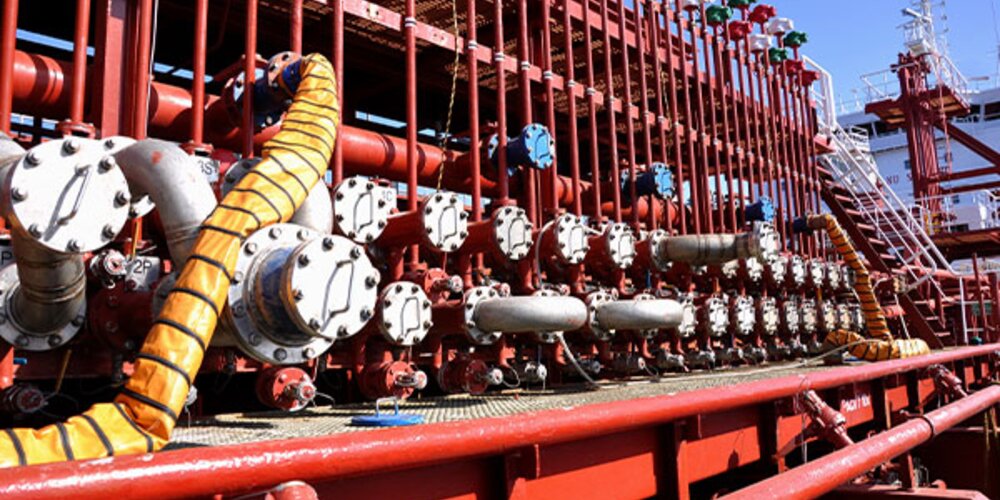
Positive segregation is the physical removal of a pipeline section such that an air gap is placed between two, or more, differing products.
This may be achieved by the use of spool pieces, or by the removal of valves or by proprietary methods, such as ‘Suet’ valves or ‘blind flange valves’:
- Author
- Patrick Barker
- Date
- 03/01/2023