
At the Edge of Safety: How the Polar Code Changed Arctic and Antarctic Cruising
For much of modern shipping history, vessels entering the Polar regions were regulated in much the same way as those sailing in more temperate parts of the world. The assumption was that the existing safety framework was broad enough to cover all environments. However, in the Polar Regions the cold shapes everything. Ice can appear without warning and alter a ship’s route. Equipment may not function as expected. Even routine operations become more demanding. Ships built for milder climates were never intended for such extremes.
Over time, the risks became impossible to ignore. The Safety of Life at Sea Convention provided a global baseline for passenger protection but the Polar regions are not simply another cruising ground. Most critically of all, rescue can be days away. In many parts of the Arctic, there may be no nearby port, no immediate aerial support, and little room for error.
As Dr. Luis Guarin, Principal Naval Architect at Brookes Bell, explains, “If something goes wrong in the Polar Regions, as with any other remote area, you must assume that help will not arrive quickly. The ship itself must be its own best lifeboat. You need enough survivability and redundancy to keep people safe for a long time on board.”
At the same time, environmental concerns were mounting. Both Polar regions contain ecosystems that are exceptionally sensitive. A single fuel spill or grounding incident can cause damage that lasts for generations. In Antarctica, this vulnerability is heightened by its legal status under the Antarctic Treaty, which prohibits commercial shipping and limits activity to research and tourism. In the Arctic, the pressures differ. The region holds vast economic resources, and is a focus for fishing, transit routes, and resource exploration, which increases the number and type of vessels entering the area.
By the early 2000s, the conclusion was unavoidable. Voluntary guidance was no longer enough. The growing gap between Arctic reality and global regulation led directly to the development of the Polar Code. By 2017 for new vessels and 2018 for existing ships of 500GT and above, a single enforceable framework now governed safety, environmental protection, and crew training in polar waters.
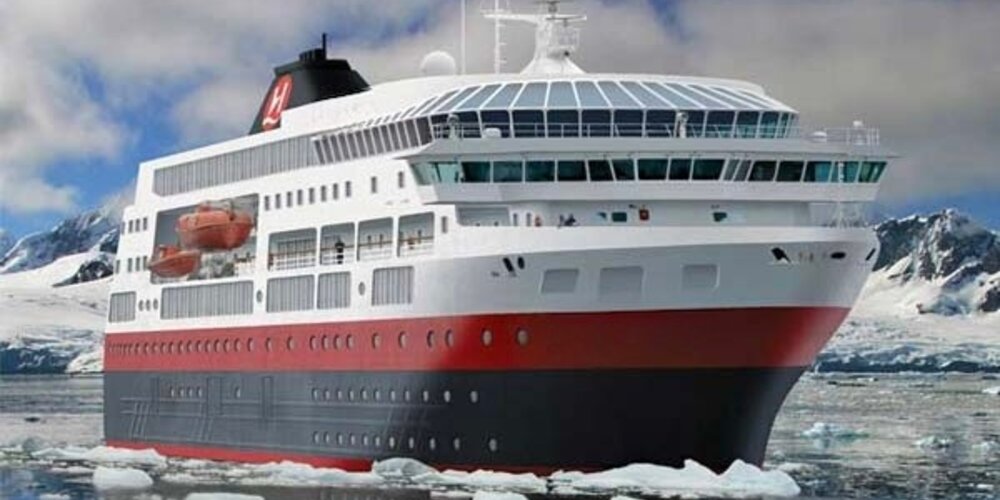
While regulation struggled to keep pace, Polar regions tourism surged. In Antarctica, the Peninsula became one of the most popular destinations for expedition cruising during the southern summer. Where once you might only have found scientists and expedition vessels has now become one of the fastest growing segments in cruise travel. This rise in activity in both the Arctic and Antarctic was a major reason why the new rules were named the Polar Code rather than the Arctic Code, ensuring that both regions were covered.
Each season now sees passenger ships sailing to Antarctica, as well as to Greenland, Svalbard, and across the Canadian Arctic. Modern expedition vessels routinely carry several hundred passengers into areas with very limited shore infrastructure, placing even greater importance on careful planning and robust safety standards.
Climate change has added further complexity. Thinner, more mobile ice has opened new routes while making others increasingly unpredictable. Longer seasons encourage greater traffic while stretching search and rescue resources across vast distances.
“The nature of risk changes completely in these regions,” Luis notes. “You are dealing with ice movement, extreme cold, long periods without assistance, and very limited margins if systems fail.”
The appeal of the Polar regions is undeniable. Antarctica offers dramatic scenery and a sense of untouched wilderness. The Arctic combines natural beauty with significant economic and political importance. Yet at the edge of safety, where beauty meets risk, both environments demand a level of respect and preparedness that goes far beyond traditional shipping operations.
Regulation & certification
The Polar Code fundamentally changed how a passenger ship is judged fit for polar service. Its requirements recognise that the operating realities of the Arctic and Antarctica are very different, yet equally demanding. Under the Code, a vessel must now hold a Polar Ship Certificate and maintain a Polar Waters Operational Manual. Together, these confirm that the ship has been assessed for ice conditions, low temperatures, limited rescue availability, and environmental sensitivity, and that it will operate within defined limits.
Certification is not simply a document exercise. It involves scrutiny of hull strength, propulsion redundancy, navigation capability, fire safety, electrical systems, evacuation arrangements, and survival equipment built for prolonged exposure to cold. Lifesaving appliances must support passengers for extended periods without outside assistance. Crews must undergo specialist training in ice navigation, risk awareness, and emergency response.
“The Polar Code is strong because it is goal-based. It defines what must be achieved, not just what must be fitted; it is not about ticking boxes,” Luis explains. “You are testing whether the ship can actually operate safely in harsh conditions and in the event of a credible emergency, whether the ship can survive to protect the people onboard and minimise the potential impact on the environment .”
The Polar Code has reshaped the safety landscape across both regions, in different ways. In Antarctica, it has formalised the strict standards needed for tourism and scientific activity in an environment governed by international treaty and protected from commercial shipping. In the Arctic, it has cemented environmental protection in an area where oil, gas, and cargo vessels are all regularly active.
Yet regulation alone cannot remove risk. Traffic continues to increase. Ships are becoming larger. Operating seasons are getting longer. Environmental pressures are growing in both hemispheres. It is the combination of sound regulation, technical assessment, and disciplined operation that ultimately determines whether Polar cruising remains responsible.
Maritime consultancy from Brookes Bell
With a history stretching back over a century, Brookes Bell has been serving the maritime and energy industries with multi-disciplinary technical and scientific consultancy services since 1903.
We are regarded by many of the leading names in these industries as the ‘go to’ firm for casualty investigation, forensic analysis, technical dispute resolution and expert witness work.
If you need help with a maritime-related matter, contact our team today.
For more maritime industry insights, news and information, read the Brookes Bell News and Knowledge Hub…
- Author
- Andrew Yarwood
- Date
- 30/01/2026