
HMS Prince of Wales Conducts Royal Navy’s First Ship-to-Ship Cargo Drone Transfer
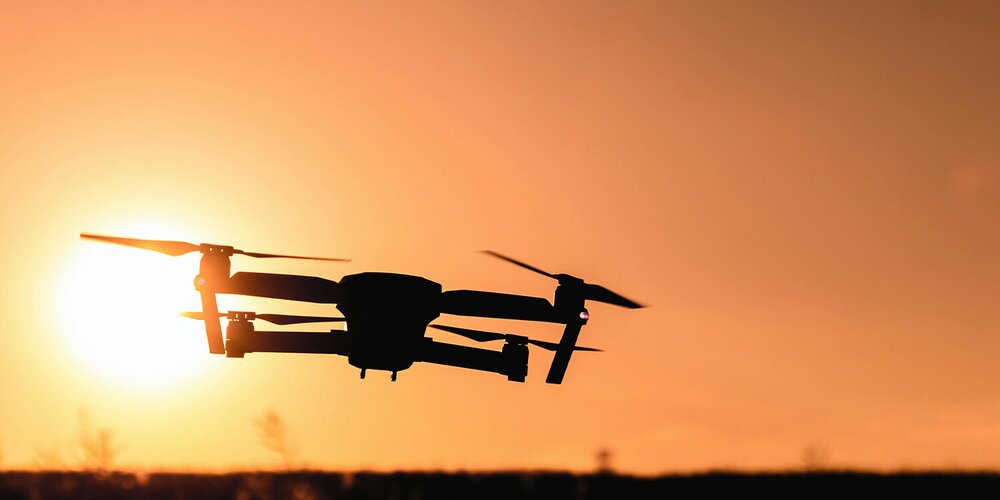
While deployed to the Indo-Pacific, the aircraft carrier HMS Prince of Wales has become the first Royal Navy vessel to use an unmanned cargo drone for ship-to-ship transfers.
The carrier and destroyer HMS Dauntless utilised a Malloy T-150 quadcopter to move small packages across a one-mile transit, removing the need for a helicopter or small boat in routine supply runs.
“This is a key milestone for the trial, achieved by all the hard work that everyone has put in. I’m proud to have achieved this first for the Royal Navy and excited to progress further over the duration of the deployment,” said 700X Pioneer Flight Commander aboard Prince of Wales, Lieutenant Matt Parfitt.
On each flight, HMS Dauntless personnel guided the drone to a precise landing on deck. The Malloy T-150 can carry payloads of up to 150 kg, making it ideally suited for urgent stores, spare parts or medical supplies. Its vertical-take-off-and-landing capability removes the need for extensive deck space, a critical advantage in the confined environments of warships at sea.
The Royal Navy’s interest in cargo drones dates back five years, when the Malloy T-150 was trialled in amphibious assault exercises for ammunition drops and combat resupply. Concurrent development of the larger T-400 variant aimed to deliver heavier loads.
In 2023, a separate team tested the fixed-wing W Autonomous Systems HCMC drone, which boasted a 100 kg payload and an 850-nautical-mile range for shore-to-carrier missions.
“This milestone in the Malloy trials is a step toward the vision of a fully integrated hybrid carrier air wing. By taking some of the logistics burden, Malloy will allow our naval helicopters to concentrate on their core outputs,” said Commander Air Group for the UK Carrier Strike Group, Captain Colin McGannity.
“The really exciting bit is that we then plan to incorporate these lessons to be able to use UAVs for many other roles, including options for war fighting”.
The success of the Malloy T-150 trials on HMS Prince of Wales emboldens plans to integrate unmanned systems across the fleet’s carriers, destroyers and frigates, thus improving operational flexibility and reducing risk to personnel.
As HMS Prince of Wales continues her round-the-world deployment, further unmanned aerial vehicle trials are scheduled, with the aim of establishing a permanent drone flight capability aboard Royal Navy vessels by the end of the decade.
The Brookes Bell difference
The maritime sector is at the heart of the global economy, supporting our way of life across the world.
Brookes Bell has been providing multidisciplinary technical and scientific consultancy for over a century, and are regarded by many of the biggest names in the maritime and energy industries as the ‘go to’ firm for casualty investigation, forensic analysis, technical dispute resolution and expert witness work.
Contact our team today to see how we can support you and your business.
For more maritime industry insights, news and information, read the Brookes Bell News and Knowledge Hub…
A Brief History of the Suez Canal | The World's Largest Container Ships | Iraq’s Al Faw Port and “Dry Canal” to Rewrite the Global Trade Map
- Author
- Andrew Yarwood
- Date
- 08/12/2025