
How the MV Estonia Disaster Reshaped Modern Ferry Safety
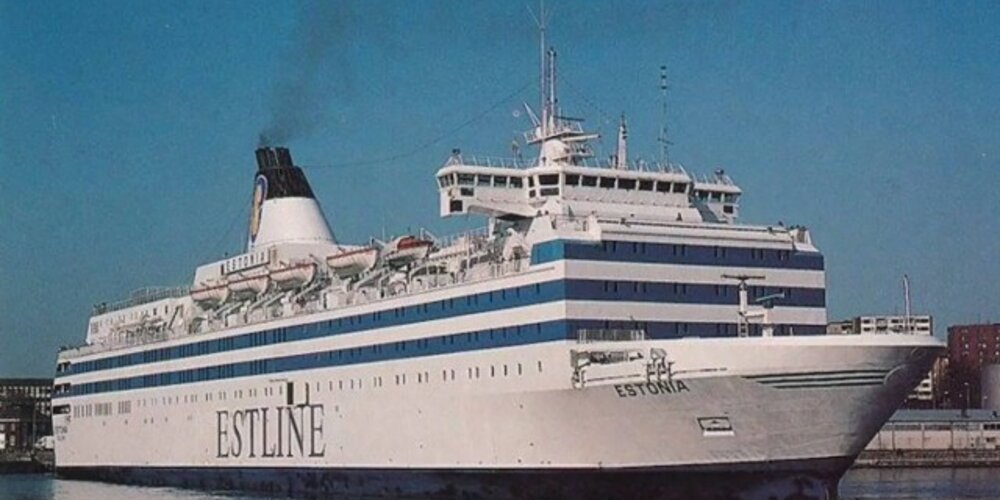
In the early hours of 28 September 1994, the ferry MV Estonia was making its overnight crossing from Tallinn to Stockholm through the Baltic Sea. With 989 passengers and crew on board, it was a routine voyage in familiar waters.
Around 0100, something went catastrophically wrong. Rough seas and windspeeds of up to 50mph had persisted, and a loud metallic bang was heard, presumably from a large wave hitting the front of the vessel. Water began entering through the bow visor and ramp. Within minutes, the ferry developed a severe list. Less than an hour after the first signs of trouble, the Estonia disappeared beneath the surface.
852 people lost their lives. Only 137 survived.
Even three decades on, its name carries a weight that few maritime disasters do. It was not simply the scale of the loss. It was the speed. The suddenness. The way a large, modern ferry could capsize so quickly shocked the public and the industry alike.
For naval architects and regulators, the disaster exposed a difficult truth. Many ferries were being designed and assessed in ways that did not reflect the real conditions they were operating in.
As Dr Luis Guarin, Principal Naval Architect at Brookes Bell, explains, “When this incident was examined closely, it became clear that the rapid capsize was linked to water getting onto the vehicle deck. Ferries were far more vulnerable than many realised, largely because their stability had never been assessed with those real accidental conditions in mind.”
At the time, the standard vessel design stability verification approach was largely static. Designers would model a damaged vessel in calm water, allow the water to settle inside the hull, and check the final stability. The process ignored what happens in the minutes leading up to that point. In reality, a damaged ship may be moving in waves, taking more water onto the deck, or losing buoyancy in areas that were never meant to be submerged.
As Luis puts it, “A ship does not wait calmly for water to settle. It is already rolling in waves, taking on more water, and losing stability moment by moment. That early, dynamic phase is often where the real danger lies.”
The MV Estonia made that clear in the most devastating way.
A collective response
In the wake of the tragedy, European governments and researchers launched one of the largest ferry safety studies ever undertaken. Universities, operators, classification societies, and regulators came together to understand why ferries were failing so quickly and what could be done to prevent it.
This work led to a simple but powerful conclusion. Ships needed to be designed for the conditions they would actually face. Not calm water. Not theoretical flooding. Real waves, real damage, and real time.
The International Maritime Organization recognised the importance of this research. But applying it retrospectively to every ferry in the world would have required enormous investment, and international agreement proved difficult to reach.
Northern European countries, however, felt they could not wait.
The result was the Stockholm Agreement, a regional safety standard adopted in 1996. It applied to ro-ro passenger ferries operating in Europe’s northern waters, where weather and wave heights are harsher and where the risk of rapid capsize is greater.
For the first time, ferries had to prove they could survive with water on their vehicle decks in realistic sea states. A ferry operating in the Baltic might need to withstand two metre waves while already carrying half a metre of water on deck. Meanwhile, a ferry sailing off the UK or Norway might be required to survive four metre waves under the same conditions.
“The Stockholm Agreement was a turning point because it brought realism into the rules,” Luis explains. “For the first time, regulators recognised that ferries had to be able to survive real damage in real sea states. It moved safety from theoretical assumptions to something grounded in what actually happens at sea.”
This shift meant that many existing ferries did not comply. The Agreement therefore allowed operators to demonstrate safety through physical testing. Scale models were placed in wave basins and subjected to damage and sea states that matched the regulatory criteria. If the model survived for a set period, the real vessel could continue operating, sometimes with targeted upgrades.
This blend of research, simulation, and model testing created a new mindset. Stability was no longer something checked at the end of a calculation. It was recognised as a dynamic, evolving process that needed to be assessed across a range of conditions and possibilities.
A lasting legacy
For years, the Stockholm Agreement set a higher bar than even the global SOLAS convention. Eventually, the insights it introduced filtered into international regulation, shaping the way passenger ship survivability is assessed worldwide.
Its legacy goes beyond technical rules. It changed expectations and how naval architects view safety margins. Most importantly, it reinforced the idea that regulations cannot rely on static assumptions when the sea is anything but static.
Today, when designers and regulators talk about wave action, survivability, water on deck, and dynamic stability, they are drawing directly from the lessons of MV Estonia. Lessons that continue to save lives.
Maritime consultancy from Brookes Bell
With a history stretching back over a century, Brookes Bell has been serving the maritime and energy industries with multi-disciplinary technical and scientific consultancy services since 1903.
We are regarded by many of the leading names in these industries as the ‘go to’ firm for casualty investigation, forensic analysis, technical dispute resolution and expert witness work.
If you need help with a maritime-related matter, contact our team today.
For more maritime industry insights, news and information, read the Brookes Bell News and Knowledge Hub…
- Author
- Andrew Yarwood
- Date
- 30/01/2026