
Metallurgy: Turning Failure into Understanding
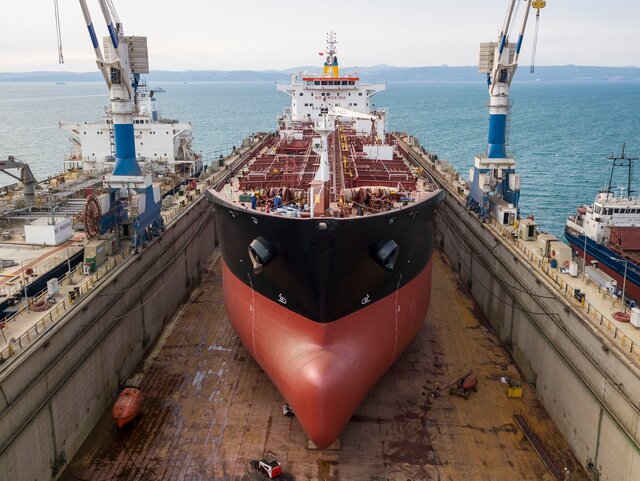
At first glance, metallurgy can appear complex and remote. Microscopes, fracture surfaces, and alloy compositions are not topics most people encounter in everyday conversation. Yet in reality, metallurgy underpins almost every engineered structure in the modern world. From ships carrying global trade to land-based infrastructure, aircraft, energy systems, and industrial machinery, metals are fundamental to safety, performance, and reliability.
At Brookes Bell, metallurgy is not confined to laboratory analysis. It is about understanding why materials behave as they do, identifying the root causes of failure, and translating highly technical science into clear, practical insight that clients can rely on.
At its core, metallurgy is the physical and chemical study of metals and alloys. It expands from how they are produced to how they perform under stress or how they interact with their environment. One of the specialists doing exactly that is Dr. Leanne Jones, part of the metallurgy team at Brookes Bell. For Leanne, it is also a discipline rooted in observation and interpretation.
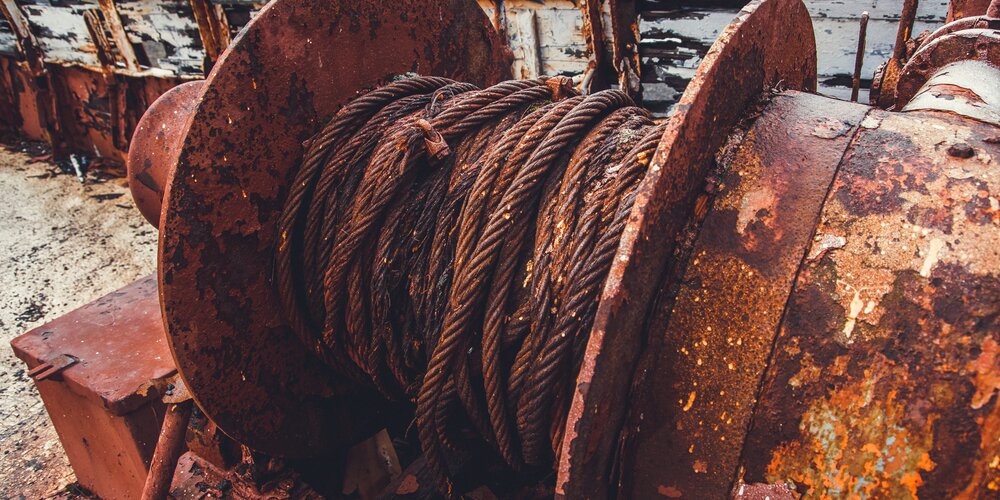
“When a metal fails, there are clues everywhere,” she explains. “A fracture surface can tell you a story in the same way the rings of a tree do. You can see what the metal has been through, the stresses, the damage, the environment, simply by looking closely.”
This ability to read and interpret those clues allows metallurgists to determine how and why a failure occurred, whether it involves a small component or a critical structural asset. While the techniques may appear highly specialised, the principles themselves are familiar. Metallurgy has shaped human development for thousands of years.
“People often think they don’t know anything about metallurgy, but it has been part of human development for thousands of years,” says Leanne. “From the Bronze Age through to modern steel structures, we have always been learning how metals behave.”
In practice, a key part of the metallurgist’s role is translation. Pages of laboratory reports, that may include microscopy images, chemical analyses, mechanical properties and other test data must be communicated clearly to clients across shipping, energy, insurance, and legal sectors, without losing scientific rigour. Visual evidence plays an important role in that process.
“You can show and explain to someone a fracture surface under a microscope and suddenly it clicks,” Leanne explains. “You do not need equations. You can literally see the history of what happened.”
History offers clear reminders of why metallurgical understanding matters. During the Second World War, Liberty Ships were built at speed using welded construction rather than traditional riveting. However, when docked in cold North Atlantic waters, some of the ships underwent catastrophic structural failures due to cracks being able to propagate through the now seamless hull. The cracks were found to have initiated from common stress concentrators such as at square edges of hatches and from welds. From this one instance, so much was learnt and put in place as a result; first and foremost, the ductile to brittle transition temperature of metals was discovered, and secondly, some common practices that we still see today including hatch cover corners on a ship being rounded and reinforced, and welds are now inspected and highly regulated by standards.
“They were solving one problem and unknowingly creating another,” says Leanne. “It shows how important it is to understand how materials behave in real environments, not just in theory.”
That lesson remains relevant today. Metallurgy directly affects safety, asset integrity, and operational reliability, regardless of sector. Brookes Bell is well established in the maritime industry, but the same metallurgical principles apply well beyond shipping.
“A metal does not care whether it is on a ship, in an aircraft, or on land,” Leanne notes. “The mechanisms are the same, what changes is the environment and how the component is used.”
As a result, Brookes Bell’s metallurgists work across shipping, offshore energy, infrastructure, aviation, and manufacturing, collaborating closely with engineers, surveyors, fire investigators, and laboratories worldwide. Drawing together documentary evidence, inspections, testing results, and operational context allows the team to reach robust, defensible conclusions.
For Leanne, the most rewarding aspect of the work is problem-solving. Investigations often begin with large volumes of information and no obvious starting point.
“Sometimes you are faced with hundreds of documents and you do not know where to start,” she says. “Then you find one detail that suddenly makes everything fall into place.”
Those findings often inform future decisions, improve safety, and prevent repeat failures.
- Author
- Andrew Yarwood
- Date
- 24/02/2026