
Royal Navy Unveils Drone-Led Plan to Monitor Russian Submarine Activity in North Atlantic
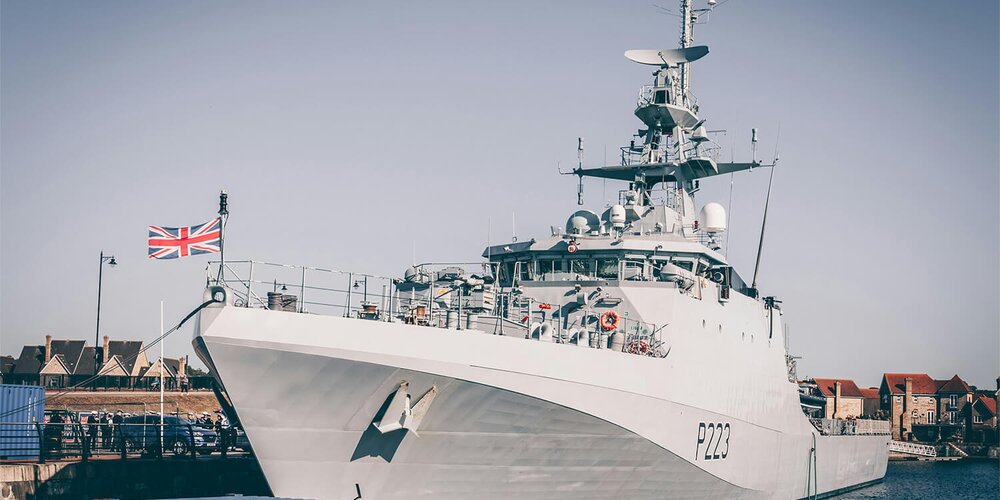
The Royal Navy has announced a new plan to counter increasing Russian submarine activity in the North Atlantic, with unmanned technology set to assist in monitoring the Greenland-Iceland-UK (GIUK) Gap.
The initiative, known as the “Atlantic Bastion” operating plan, reflects both the growing threat posed by Russia’s Northern Fleet and the limitations of Britain’s ageing frigate fleet.
At a media display day in early December, Defence Secretary, John Healey welcomed reporters aboard the experimental ship XV Patrick Blackett, a test platform for unmanned systems.
Demonstrations included the large unmanned underwater vehicle Excalibur, a quadcopter, and a mock-up of the unmanned helicopter Proteus. Officials said these technologies will be deployed to track Russian movements and safeguard the UK’s subsea cable network, which has been increasingly targeted by Russian vessels such as the military research ship Yantar.
Concerns about espionage and sabotage have grown as British officials say that Russian presence in UK waters has risen by 30% in recent years, stretching the Royal Navy’s ability to respond.
The reliance on drones has drawn criticism from defence analysts, who argue it highlights long-term underinvestment in traditional antisubmarine warfare capabilities.
“The Royal Navy does not have the ships to do this job coherently or credibly and is looking to address it with drones as they are cheaper,” said RUSI Professor, Peter Roberts, in comments to the BBC.
The new patrol strategy is being paired with closer cooperation with Norway under the recently signed “Lunna House” defence accord. The agreement will see the two nations’ navies acquire frigates of the same class, enhancing interoperability and standardisation.
Access to Norway’s recruitment pool and state investment is expected to strengthen NATO’s antisubmarine warfare capabilities in the North Atlantic, which have been strained in recent years.
The Royal Navy’s shift towards unmanned systems highlights the urgency of adapting to evolving threats while bridging gaps in conventional fleet strength.
With Russian submarine activity intensifying and critical infrastructure at risk, officials say the Atlantic Bastion plan is designed to provide a credible deterrent and ensure Britain remains capable of protecting its interests in the North Atlantic.
Master Mariner services with Brookes Bell
At Brookes Bell, we strive to ensure that our Master Mariner services are continually evolving to meet the ever-changing needs of the maritime industry.
Our vertically-integrated approach means that we can investigate, troubleshoot and advise on a broad range of maritime matters, whilst providing you with a single point of contact.
Learn more about our Master Mariner services today
For more maritime industry insights, news and information, read the Brookes Bell News and Knowledge Hub…
A Brief History of the Suez Canal | The World's Largest Container Ships | The World's Biggest Container Shipping Companies
- Author
- Andrew Yarwood
- Date
- 25/02/2026