
Samsung and Evergreen Complete 10,000 km AI Navigation Trial on Ever Max
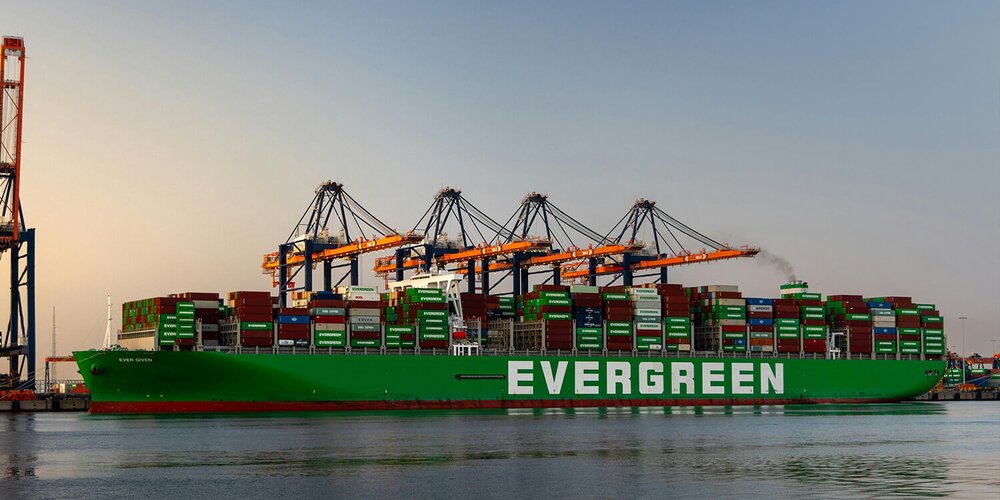
Samsung Heavy Industries, in collaboration with Evergreen, has completed a 10,000 km trans-Pacific trial of its Autonomous Navigation Technology aboard the 160,000 dwt Ever Max.
The voyage, 5,400 nautical miles from Oakland to Kaohsiung, is a significant advancement in AI-driven ship navigation systems.
Work on the Samsung Autonomous Ship (SAS) system began in 2019, with earlier trials including a 500-nautical-mile run in Korean waters on a university training vessel.
For this latest demonstration, SAS was deployed on one of Evergreen’s largest containerships, capable of carrying 15,500 TEU and commissioned in 2023 as part of the M Class fleet.
Between 25th August and 6th September, SAS executed 104 optimal guidance operations and 224 automatic ship-control tasks without crew intervention. The system analysed weather data every three hours, autonomously adjusting speed and course to maintain efficiency and safety throughout the crossing.
SAS uses radar and GPS signals with camera imagery to build real-time situational awareness, controlling engines and rudders to avoid collisions and optimise routing. This level of integration allows the vessel to respond to changing sea states, reducing reliance on manual navigation inputs.
“SAS has evolved from an autonomous collision-avoidance assistant to a system that maintains economical speed on its own and meets arrival times,” Vice President and Head of the Shipbuilding and Offshore Research Institute at Samsung Heavy Industries, Lee Dong-yeon, said.
Samsung has reported the trial delivered measurable benefits, including fuel savings compared with conventional operations and an on-time arrival in Kaohsiung. By continuously optimising for weather and route conditions, the system helps prevent costly supply-chain disruptions and port delays.
South Korean shipbuilders see autonomous navigation as a competitive edge. HD Hyundai Heavy Industries demonstrated its Avikus system on a long-distance LNG carrier voyage in 2022 and is now commercialising versions for pleasure craft and large commercial vessels.
Japan, Norway, and China have also conducted autonomous ship trials, highlighting global momentum toward automated and remote maritime operations aimed at cutting fuel use, lowering emissions and easing crew workloads.
The Ever Max trial shows the potential for AI-based navigation on deep-sea voyages. Samsung and Evergreen plan further collaborations to refine SAS, with a view to broader deployment across container and bulk fleets in the coming years.
Manoeuvring and ship handling services at Brookes Bell
The manoeuvring of a ship in hazardous and busy channels can lead to collisions, groundings or close ship passing incidents. Brookes Bell is on hand to provide you with the best scenario analysis services for forensic investigations or the assessment and mitigation of risk.
We offer a broader package of services that cover a variety of incidents. We are able to take an incident from initial plotting of GPS data, an initial assessment from a Master Mariner, the simulation of an incident and counter-factual alternatives, to the creation of realistic 3D simulations.
For more information on how Brookes Bell can help you and your business, contact us today for an initial consultation.
Discover more about our manoeuvring and ship handling services today
For more maritime industry insights, news and information, read the Brookes Bell News and Knowledge Hub…
A Brief History of the Suez Canal | The World's Largest Container Ships | Iraq’s Al Faw Port and “Dry Canal” to Rewrite the Global Trade Map
- Author
- Andrew Yarwood
- Date
- 17/12/2025