
Wreck of WWI Armed Merchant Cruiser Discovered off Scotland
Divers have located and identified the wreck of HMS Bayano in the Firth of Clyde, confirming the resting place of the First World War armed merchant cruiser torpedoed in 1915.
A community‑led team of divers has confirmed the identity of the armed merchant cruiser HMS Bayano on the seabed in the North Channel. The discovery comes after months of archival research, sonar surveys and technical dives that matched hull features with records at the UK National Archives.
Bayano began life as a refrigerated cargo ship in 1913 before being requisitioned and converted into an armed merchant cruiser for the Royal Navy shortly after the outbreak of war. Fitted with main guns fore and aft, such conversions were a wartime expedient used to bolster Britain’s escort and patrol forces in 1914–15.
The vessel was torpedoed by the Imperial German Navy submarine U‑27 in the early hours of 11th March 1915 while on patrol. Contemporary accounts and survivor testimony described catastrophic flooding after a hit beneath the bridge, and the sinking claimed the lives of roughly 200 men, with only 26 survivors managing to escape.
ProjectXplore, the team responsible for the discovery, used towed side‑scan sonar to locate the target before conducting technical dives in October 2025 to document the wreck in detail. Divers compared visible superstructure and hull features with historical plans and photographs held in public archives to reach a conclusive identification.
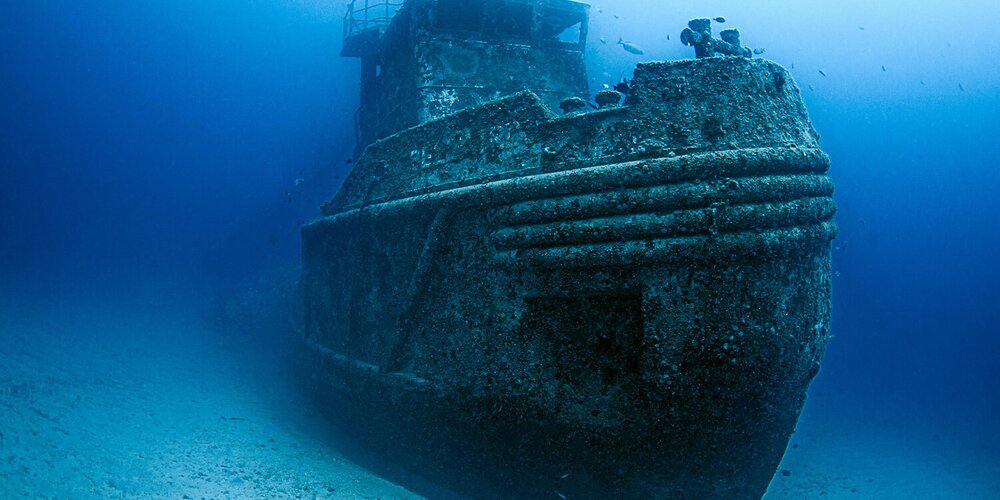
The wreck sits at depth in the Firth of Clyde, with parts rising from the seabed and presenting a recognisable silhouette consistent with early 20th‑century merchant cruiser conversions.
Maritime archaeologists and local diving groups have welcomed the find as an important piece of naval history and a reminder of the hidden casualties of maritime warfare around Britain’s coasts.
The Bayano is one of several armed merchant cruisers lost during the First World War, and their role and the human cost of auxiliary warship losses have been the subject of renewed interest among historians and the diving community alike.
As with many wartime wrecks, the Bayano is a maritime grave. Divers and researchers involved emphasised that any future work should respect protection regimes and the sensitivities of descendants and communities linked to the lost crew.
Teams used side‑scan sonar, detailed photographic documentation and comparison with National Archives material to make the match. This demonstrates how collaboration between amateur specialists and professional historians can produce authoritative outcomes where official searches either were not possible or did not previously succeed.
With the wreck now identified, maritime historians will be able to refine records of Bayano’s final voyage and casualty lists, and communities will have a clearer focal point for remembrance.
The finding adds to Britain’s First World War naval story and renews attention on the many wartime wrecks that lie off the nation’s shores.
Salvage and wreck project management support
Managing a large salvage or wreck removal project is no mean feat. Yet, it’s something at which Brookes Bell excels.
Our Special Casualty Representatives (SCRs) together with our multidisciplinary casualty management system allow us to use our range of in-house specialists to manage even the largest and most complex of casualty scenarios.
Are you in need of wreck and salvage project management support? Contact Brookes Bell today.
Learn more about our wreck and salvage management services
For more maritime industry insights, news and information, read the Brookes Bell News and Knowledge Hub…
A Brief History of the Suez Canal | The World's Largest Container Ships | Iraq’s Al Faw Port and “Dry Canal” to Rewrite the Global Trade Map
- Author
- Andrew Yarwood
- Date
- 29/12/2025