
What Your Breakfast Cereal Can Teach Us About Cargo Liquefaction
According to a long-term casualty report from the International Association of Dry Cargo Shipowners (Intercargo), cargo liquefaction remains the single biggest risk for loss of life in the bulk carrier sector. The report noted that, from 2013-2022, five bulk carriers capsized due to cargo liquefaction, which resulted in 70 seafarers losing their lives and millions of dollars in lost cargo and resulting claims.
Despite vast improvements to vessel safety over the last few years, cargo liquefaction remains an ever-present risk, owing to its unpredictability. The impact of cargo liquefaction can accumulate slowly over the course of a voyage or it can occur suddenly without any warning to the crew. As such, Brookes Bell and its team of cargo scientists regularly handles cargo liquefaction cases all over the world.
Despite its unpredictable nature, the science behind cargo liquefaction has long remained the same.
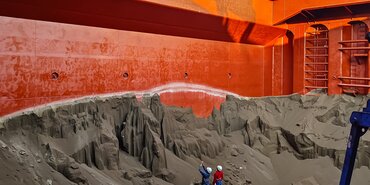
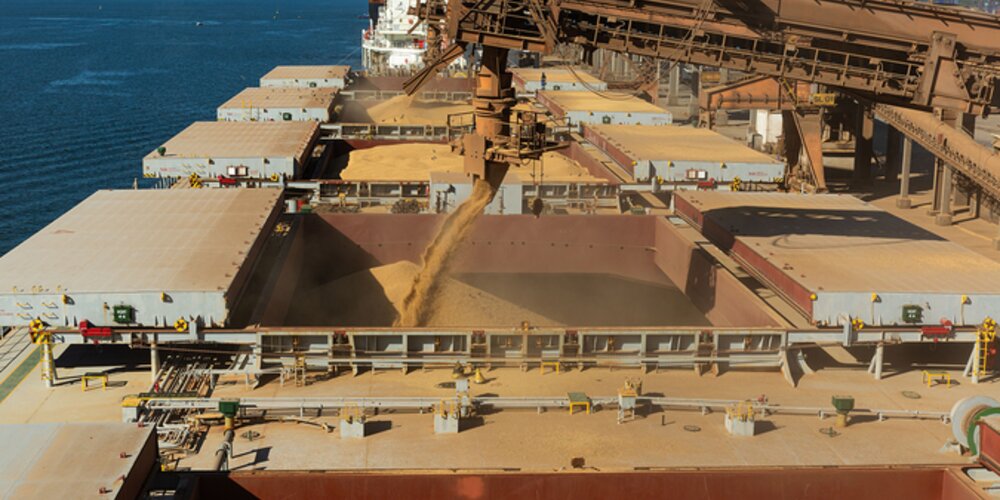
Cargo liquefaction occurs when the moisture content of certain ores and minerals that are loaded into a bulk carrier hold is too high – traditionally above the transportable moisture limit (TML). This is particularly the case for sand-based cargo, which can look completely dry and at times even dusty when loaded. When subject to energy from the vessel in movement, combined with impacts from heavy waves, the once-dry cargo can turn and act as a liquid. If this liquefied cargo shifts too often from side to side in the cargo hold during transit, the risk of the bulk carrier capsizing increases exponentially.
“Think of this dry bulk cargo as the contents of your breakfast cereal. In the factory, the box is full when it leaves but by the time it makes it to your breakfast table, it has been compressed enough by movement during transit that the box is one-third empty. The same applies to certain ores and minerals. Once they are compacted down and the air has been expressed from the cargo hold, there may not be enough space for the particles of water to escape that were in there the whole time,” said Dr Martin Jonas, Director of Science at Brookes Bell.
“This water cannot be compressed. Instead, due to the lack of air space in the cargo hold, it will press other particles away from it due to higher water pressure levels. As a result, the cargo starts to liquefy so what once looked like a solid sand-based cargo now has a viscous mud-like consistency,” he added.
In order for carriers to be safe, the cargo needs to have a low enough moisture content at the time of loading to prevent the risk of cargo liquefaction and ensure the integrity of the vessel is not compromised. That is because cargo liquefaction cases are purely safety issues and not commercial matters.
“Bulk carriers are not designed to move liquefied cargo. They are designed for the cargo to have a centre of mass, ensuring the cargo stays exactly where it is at the time of loading. If the cargo moves from side to side, the stability of the ship is compromised and the carrier can capsize and sink much more easily. Crucially, they can do this with very little warning, which is a major risk to the crew,” Dr Jonas noted.
To combat the risk of cargo liquefaction, the International Maritime Solid Bulk Cargoes (IMSBC) Code has been developed by the IMO to ensure there are rules and regulations to facilitate the safe stowage and shipment of solid bulk cargoes. This includes requiring cargoes with a moisture content above the TML to be carried onboard specially constructed cargo ships that have the strength and stability to move this type of cargo safely and securely.
For vessel operators and cargo shippers, being prepared and ensuring the moisture level of the cargo are within the limits designated by the IMSBC prior to any loading operation is the ideal time to counteract the risk of cargo liquefaction. According to Dr Jonas, this is where Brookes Bell sees most of its work on the issue.
“Most of the cases that land on our desks at Brookes Bell is not to related to sinkings or even the cargo that liquefies. Almost all the cases we deal with are load port disputes where shippers are presenting a cargo and the Master does not like the look of the moisture level. This is when Brookes Bell steps in to review documentation, analyse the actual cargo and start asking the right questions or raising the necessary concerns,” Dr Jonas said.
“These disputes can last for months, resulting in the vessel sitting there for a long time while we help to determine whether the cargo is safe and legal for transportation and not at risk of liquefaction.
“You cannot compromise on safety. That is what makes these disputes so bitter at times because it is very much black and white so someone is at fault. This is why the work Brookes Bell does to support cargo loading disputes around the world is so important. We come in as independent third-party assessors to advise on proper sampling and testing of commodities, and attend cargo loading procedures to give all parties peace of mind to know their cargo and vessel is safe,” he added.
Find out how Brookes Bell can assist you with cargo liquefaction issues here.
- Date
- 04/11/2026