
Cargo Line Cleaning: Why a Clean Tank May Not Mean a Clean Cargo System
Chemical tanker cleaning programmes often – and quite rightly – focus upon the cargo tank itself. However, such an unerring focus can also overlook other areas that can result in cargo contamination: namely, cargo lines and the broader cargo system. In this article, we’ll look at the root causes of line contamination as well as operational considerations you should take into account.
The causes of cargo-line contamination
Cargo-line contamination is most closely associated with the carriage of vegetable oils and other high-viscosity cargoes.
Why? Because these products can be difficult to remove completely because they do not always drain or wash away as easily as lower-viscosity liquid cargoes. For example, residues may remain on tank surfaces, around internal structures, within pipework, and in areas where flow is limited, or drainage is incomplete.
Furthermore, in many cases, the cargo tank itself may appear clean – passing visual inspection, wall-wash testing, and even (in some cases) wash-water analysis prior to loading.
However, this does not always confirm that the wider cargo system is free from residue; residue which can subsequently contaminate the cargo.
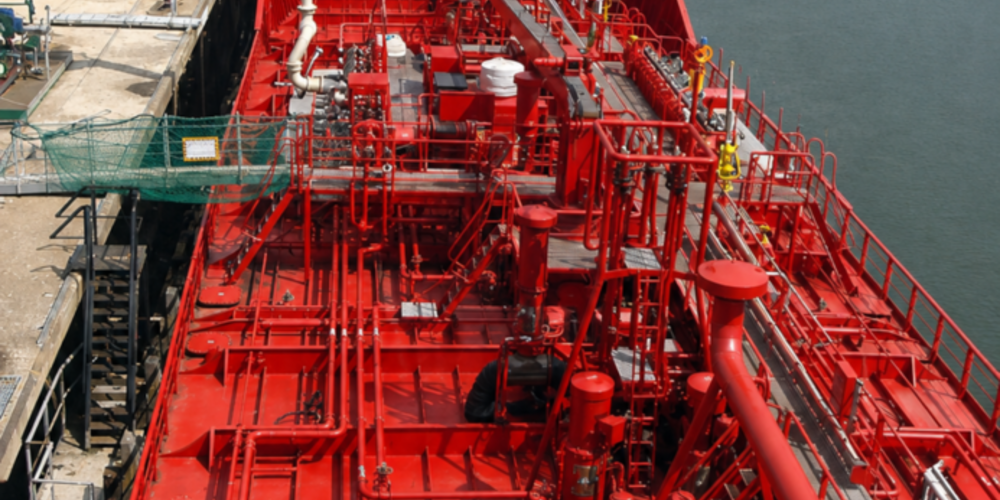
Areas of the wider cargo system that can retain residue include:
- Cargo lines.
- Valves.
- Drains.
- Manifolds.
- Blind flanges.
- Crossovers.
- Dead ends.
These can all be areas where residue can be present unless they are specifically flushed, opened, drained, and incorporated into the cleaning programme.
The risk of residue accumulating in the wider cargo system increases when said residues are allowed to cool or remain stagnant. As the high-viscosity cargo becomes less mobile, it can cling more stubbornly to internal surfaces and become harder to remove. Drying or semi-drying oils may present an additional challenge, as residues harden or polymerise if left undisturbed within pipework or low-flow areas.
Why does this matter?
Because only a relatively small quantity of residue may be needed to compromise a subsequent sensitive or high-grade cargo. In fact, contamination may only become apparent later, during discharge or after cargo analysis. By that point, the consequences can include:
- Cargo rejection.
- Delays.
- Product downgrade.
- Claims and disputes between the parties involved.
As a result, cleaning after vegetable oil and other high-viscosity cargoes should not be viewed as a tank-only operation. The entire cargo system needs to be considered, including the areas that are harder to inspect and easier to overlook.
Cargo tank cleaning: operational considerations
There are several practical aspects of cargo tank cleaning that materially influence overall cleaning effectiveness. However, these practical aspects are not always emphasised in standard guidance.
Key considerations include:
- Temperature control: where practical and operationally safe, the effects of adjacent ballast tanks should be considered, as ballast water can influence the temperature of cargo tank structures and internal pipelines during cleaning.
- Hatch management: tank-cleaning hatches and main access hatches should be cracked open during hot-water and chemical wash cycles, allowing the wash medium to reach hatch gaskets and seals where residues may otherwise remain trapped.
- Wash sequence discipline: after any sodium hydroxide, or caustic soda wash, tanks should be thoroughly rinsed with fresh water before seawater washing begins. If this step is shortened or missed, residual caustic soda may react with seawater and form white powdery deposits on tank surfaces, affecting cleanliness standards and inspection outcomes.
- Steaming: where vessel design and operational constraints permit, live steaming or cold-water steaming can provide an additional means of removing thin films of vegetable oil that may remain after conventional washing, particularly on vertical surfaces and structural members.
Cargo line cleaning: the critical interface
We can see, then, that cargo line cleaning should not be treated as a secondary task or an assumed by-product of tank cleaning. For chemical tankers moving from vegetable oils or other high-viscosity cargoes to sensitive chemical or high-grade cargoes, the wider cargo system must be considered from the outset.
A clean tank does not necessarily mean a clean cargo system.
Residues may remain in cargo lines, valves, drains, manifolds, stripping lines, small-bore pipework and dead-end sections, even where the cargo tank itself has passed inspection or testing. If these areas are not specifically addressed, small quantities of retained cargo can later migrate into the next cargo and create a contamination issue.
For this reason, cargo line cleaning should be formally incorporated into the vessel’s tank cleaning programme, with defined steps, realistic time allowances, and clear records showing that the wider cargo system has been considered.
Below, we’ve set out the key steps to consider in this process.
Pre-wash and early flushing
The pre-wash stage is one of the most important opportunities to remove cargo residues before they become more difficult to deal with.
After vegetable oil or other high-viscosity cargoes, residues are generally easier to move whilst they remain warm, fluid, and mobile. If they are allowed to cool, settle or stagnate within pipework, they may cling more stubbornly to internal surfaces and become harder to remove during later cleaning stages.
Early flushing allows residues to be transferred ashore or into designated collection tanks before cooling and solidification occurs.
Where an ambient-temperature pre-wash is required by the cleaning programme, cargo lines should also be flushed at this stage. This is particularly important following the carriage of drying or semi-drying vegetable oils, which may polymerise and harden if allowed to stagnate in pipework.
At this stage, the cleaning plan should consider:
- Which cargo lines were used during loading and discharge.
- Whether drop lines, crossovers, and manifold connections may contain residue.
- Whether stripping lines and small-bore lines require early flushing.
- Whether residues can be transferred ashore or into designated collection tanks.
- Whether any sections of the system may cool more quickly than others.
- Whether the line-flushing sequence is clearly documented.
The key point here is that line cleaning should begin whilst residues are still manageable.
Waiting until later in the cleaning programme can make the task more difficult and increase the risk that some parts of the system remain contaminated.
Hot-water and chemical washing
Hot-water and chemical wash cycles should be planned around the entire cargo system, not just the tank surfaces.
Attention should particularly focus on stagnant or low-flow sections of the piping system. Actions to be taken regarding these areas include:
- All blind flanges and cargo line dead ends, including manifold dead ends and cargo line crossovers, should be opened and thoroughly flushed.
- Cargo and manifold valves should be periodically partially closed to ensure that pipework fills completely with the wash medium.
- Cargo valves should be operated and left slightly off their seats to permit effective cleaning of valve seats and sealing surfaces.
- Cargo lines associated with deck heat exchangers, including drop lines, should be flushed and left open for drainage.
- All small-bore stripping lines should be opened, flushed and left open.
- Cargo line drain valves, including all manifold drains, must be opened and flushed.
The aim is to ensure that washing is not limited to the easiest or most obvious flow paths. The cleaning process should reach the parts of the system where retained residues are most likely to remain.
Completion and drainage
During, and at the conclusion of washing, the piping system should be left in a condition that minimises the risk of recontamination.
Drainage should therefore be treated as a defined part of the cleaning programme, not as a final ‘housekeeping’ step.
Actions that should be taken at this stage, include:
- Cargo line, manifold and small-bore line valves should be left open, where operationally safe, to allow complete drainage.
- Cargo drop lines should be flushed and left open.
- Pressure-vacuum (P/V) valve lines and vapour return lines should be flushed.
- Fixed tank-cleaning lines not used during the cleaning operation should be flushed.
- Deck penetrations such as UTI connections and sounding points should also be flushed, as these are particularly susceptible to blockage by vegetable oil residues.
This stage is particularly important, as some of the highest-risk areas are also amongst the easiest to overlook. Sounding pipes, UTI connections, P/V valve lines, and vapour return lines may not be viewed as part of the main cargo transfer route, but they can still retain residues or provide a pathway for contamination.
Integrating line cleaning into cleaning programmes
Cargo line cleaning should be formally incorporated into tank cleaning plans, with defined procedural steps and realistic time allowances. Treating line cleaning as an implicit or ad-hoc activity increases the risk that critical sections of the cargo system will be overlooked and can lead to underestimation of cleaning time requirements.
Below, you’ll find more details on these considerations.
Allowing enough time for line cleaning
One of the practical risks of cargo line cleaning is that it may be acknowledged in principle but underestimated in the actual cleaning schedule. If the programme only allows enough time for cargo tank washing, line cleaning can become:
- Rushed.
- Incomplete.
- Inconsistently carried out.
- Treated as optional.
- Overlooked under commercial pressure.
This is particularly likely when a vessel is being prepared quickly for the next cargo. However, the time saved by compressing line cleaning may be outweighed by the consequences of contamination, delay, cargo rejection, or dispute.
By allocating time properly, operators can help ensure that cargo line cleaning is treated as a critical control measure, rather than an informal activity carried out only if time permits.
Accounting for vessel-specific arrangements
Cargo line cleaning procedures should also reflect the layout and equipment of the specific vessel.
For example, chemical tankers do not all have identical cargo systems.
The location and configuration of drains, crossovers, stripping lines, manifold arrangements, deck heat exchangers, vapour lines, sounding pipes, and dead-end sections can vary significantly from vessel-to-vessel.
As a result, a generic cleaning procedure may therefore miss important contamination pathways.
Therefore, a practical cleaning programme should be based on the actual system arrangement on board. It should identify:
- Which parts of the cargo system were used for the previous cargo.
- Which lines and connections may retain residues.
- Where low-flow or stagnant areas exist.
- Which valves, drains, and dead ends require specific attention.
- How each relevant section will be flushed, washed, and drained.
- Whether any vessel-specific limitations affect the cleaning process.
This vessel-specific approach is particularly important when planning transitions from vegetable oils or other high-viscosity cargoes to sensitive chemical or high-grade cargoes.
Recording what has been cleaned
Cleaning records are an important part of demonstrating that the wider cargo system has been addressed.
If contamination is later alleged, the question will not simply be whether the cargo tank appears clean. It may also be necessary to establish whether the wider cargo system was cleaned, too.
Good cleaning records may include details of:
- The cleaning sequence followed.
- When cargo lines were flushed.
- Which lines, drains, and dead ends were opened.
- Whether valves were operated during washing.
- Whether stripping lines and small-bore lines were flushed.
- Whether vapour lines, P/V valve lines and sounding pipes were considered.
- How drainage was completed.
- Whether any vessel-specific issues were identified.
- What checks, inspections or samples were carried out before loading.
Such documentation helps support operational decision-making before the next cargo is loaded. It can also act as important evidence if a cargo claim, off-hire dispute, or liability issue arises later.
Conclusion: cargo line cleaning should be treated as a critical control point
Cargo contamination following the carriage of vegetable oils and other high-viscosity cargoes is not always the result of inadequate tank cleaning alone.
In many cases, the greater risk lies within the wider cargo system, where small quantities of residue can remain trapped in lines, valves, drains, manifolds, small-bore pipework, and dead-end sections.
This is why cargo line cleaning should be treated as a critical control point within the overall cleaning programme.
If you want to reduce the risk of cargo contamination linked to residues in the wider cargo system, then Brookes Bell can help. Our Master Mariners can advise on line cleaning best practices and procedures.
Speak to our Master Mariners today
For more maritime industry insights, news and information, read the Brookes Bell News and Knowledge Hub...
Hold Cleaning: Are Robots and Digitalisation the Future? | A Guide to Chemical Cargo Segregation | MARPOL: What You Need to Know
- Author
- Patrick Barker
- Date
- 03/08/2026