
Sulphur Cargo Damage: Getting to the Truth Before Costs Escalate
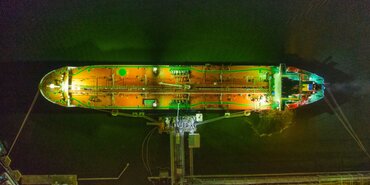
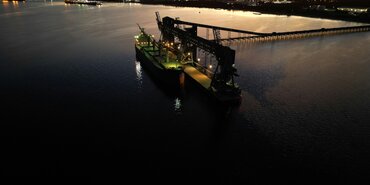
Bulk carriers loaded with elemental sulphur that spent recent months at anchorage in the Strait of Hormuz are beginning to move again, bringing discharge and repair decisions into view for vessels that in some cases sat for more than three times the period their cargo protection was designed to last. As those cargoes are discharged, the condition of the steel beneath them becomes the immediate question.
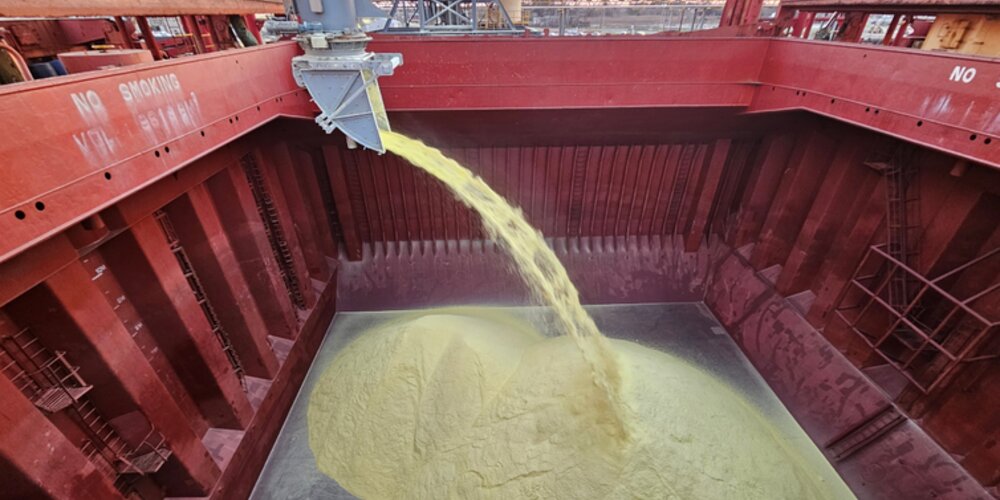
Elemental sulphur is loaded into bulk carrier holds prepared with a limewash hold block coating, which acts as a barrier between the cargo and the vessel's steel structure. The cargo is dampened with a water mist on loading, and the coating provides protection for approximately 30 days. Beyond that point the underlying steel is exposed. Where moisture and sulphur remain in contact with bare steel, an acidic environment can develop, promoting the formation of iron sulphide corrosion products and driving rapid, localised pitting corrosion at rates far exceeding normal seawater exposure.
"The hold block for carrying sulphur cargoes has a standard working life of around 30 days. Where vessels have been at anchorage for two months or more, that protection has long since been exhausted," said Arron Jackaman, Director of Non-Destructive Testing at Brookes Bell.
Since February, Brookes Bell has investigated sulphur cargo claims for vessels that exited the Strait of Hormuz. That work has documented pitting depths in unprotected steel of up to 5mm forming in approximately 50 days, with some cases recording wastage of up to 7mm. The standard corrosion rate in a seawater environment is 0.2mm per year.
The visual appearance of the damage frequently overstates its severity. Dark sulphur scale and iron sulphide corrosion products can make a hold appear heavily wasted where measurable steel loss is limited.
"Sulphur corrosion often appears visually more severe than it actually is. Localised pitting tends to concentrate at points where grab discharge equipment has broken the coating barrier, and on cargo hold tank top plating, which is left uncoated by design. Without correct measurements and quantitative assessment, there is a significant risk that steel within class limits is condemned unnecessarily," Jackaman explained.
Under Common Structural Rules, bulk carrier cargo hold structures such as tank top plating, bulkhead stools and sloping hopper plating incorporate a sacrificial corrosion allowance of 5.5mm. Visual assessment alone does not account for that margin, and repair scopes based on visual severity routinely overstate the structural renewal required.
"Wholesale steel renewal can cost around 10 times more than targeted localised repair. If the extent of repair is being decided on the basis of what the damage looks like rather than what the measurements show, then owners, charterers, and their insurers can end up paying significantly more than the structural condition requires," said Jackaman.
Establishing the true position depends on distinguishing new sulphur-related pitting from pre-existing deterioration, and on quantifying whether repair is required at all. Close-up inspection and thickness measurement, supported where necessary by metallurgical and chemical analysis, allow steel loss to be measured rather than assumed, and provide defensible conclusions on causation, scope and cost.
Holds in which the protection period has been substantially exceeded carry safety implications for those working on board. Atmospheric testing, risk assessment and confined space entry procedures should be in place before personnel access affected holds and adjacent tank spaces.
"Early engagement is critical. The strongest evidence is usually obtained before cargo residues are fully removed, surfaces are cleaned, or repair decisions have already been made. Brookes Bell's involvement from the point at which damage is first identified gives clients the best opportunity to measure the true extent of corrosion, challenge unnecessary steel renewal and the strongest basis for ensuring repair costs are fair, proportionate, and defensible," Jackaman added.
To find out more about how Brookes Bell can help you deal with the aftermath of aggressive cargoes, email our Advanced NDT team today: ndt@brookesbell.com
- Author
- Andrew Yarwood
- Date
- 19/08/2026