
From Technical Failure to Complex Claim: Investigating Collapsed Container Stows
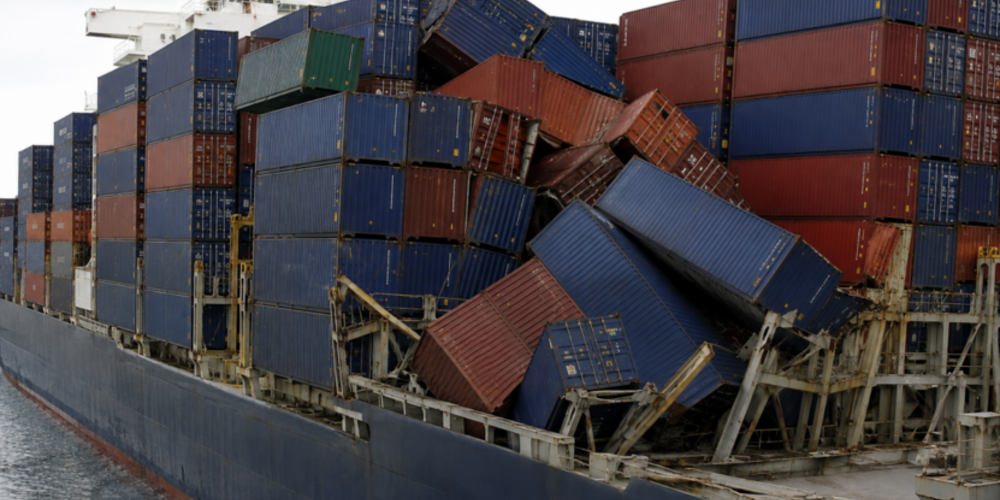
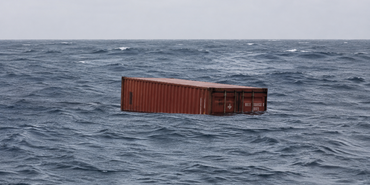
Container losses at sea more than doubled last year. The World Shipping Council's 2026 update puts the estimate at 1,478 containers lost during 2025, against 576 the previous year – driven by challenging conditions in the North Atlantic and North Pacific, and by a small number of discrete, high-consequence events.
One vessel loss alone accounted for roughly 43% of the annual total.
Those headline numbers matter less than what sits behind them. In percentage terms, container loss remains vanishingly rare against roughly 280 million containers moved globally.
But, averages don’t get claimed. Single incidents do.
When a stow collapses, the exposure rarely stays contained to the boxes that went over the side.
For insurers, P&I clubs, and legal teams, 2026 also changes the evidential landscape.
Since 1st January, amendments to SOLAS Chapter V have made reporting of containers lost or observed drifting at sea mandatory. Masters must report promptly; flag States must report to the IMO.
The result is a more complete data trail – and a higher expectation that owners and operators can account for what happened and why.
Why a stack collapse escalates so quickly
A collapsed stow is a structural event with a very wide claims footprint. Within hours it can generate:
- Cargo loss and damage, including cargo still on board but compromised.
- Hull, hatch cover, and deck fitting damage, with repair scope and off-hire potential.
- Delay and disruption, and the consequential costs that follow.
- Salvage, recovery and debris removal obligations.
- Pollution and regulatory exposure, particularly where dangerous goods are involved.
- Crew injury exposure.
Each of these attaches to different policies and different parties. Cargo interests, H&M underwriters, the P&I club and charterers may all be looking at the same incident with materially different interests in the causation finding.
That is precisely why the causation narrative – not just the damage schedule – determines how the loss is ultimately allocated.
What actually causes a stow to collapse
Stack collapse is almost never a single-cause event. It is usually a sequence: a stow that was marginal on paper, exposed to motions it was not designed for, with a securing system that had less residual capacity than assumed.
The MARIN-led TopTier joint industry project, whose final report went to the IMO in September 2025, analysed 44 incidents over two decades involving the loss of close to 10,000 containers.
Its finding is instructive: parametric rolling was the most likely cause of the largest incidents, whilst single-bay losses more often came down to local failures and stack resonance.
That distinction – systemic motion versus localised weakness – shapes where an investigation should look first.
In practice, our investigations examine:
- Environmental & Route Factors: wind, sea state, and stack exposure, including wind stacks and forecast route exposure. Weather routing decisions, and whether the passage plan reflected the conditions reasonably foreseeable at the time.
- Stowage Design & Load Path: high-cube placement, heavy-over-light stowage and localised high loads. Stack racking and compression weaknesses that only reveal themselves under combined loading.
- Securing System Integrity: condition and maintenance history of lashing equipment; twistlocks, lashing points, and their foundations. Where degradation or manufacturing defect is suspected, this becomes a metallurgical question rather than a visual one.
- Stability & Vessel Motions: GM and stability inputs, weather and sea loads, and the conditions that permit parametric or synchronous rolling to develop.
- Data & Compliance: missing lashing rods, loading computer inputs and oversight, misdeclared weights and VGM gaps. These are frequently the quiet contributory factors that surface late in an investigation and change the responsibility picture significantly.
- Cargo Shift Within the Container: due to inadequate internal cargo securing, resulting in abnormal internal loads.
- Ship Handling: the actions and decisions taken by the Master as conditions developed – course and speed alterations, and their timing.
Establishing which of these initiated the event, and which merely contributed, is what separates a defensible technical opinion from assertion.
The regulatory direction of travel
Container securing is under active review. TopTier’s recommendations have fed directly into the IMO’s work programme, with a workplan covering operational guidance and limitations, conditions at sea, loading and stowage validation and planning, strength properties and calculation standards for securing gear, and inspection programmes.
The Sub-Committee on Carriage of Cargoes and Containers meets again in September 2026, and revision of the Cargo Securing Manual guidelines remains live.
The practical implication for owners and operators is that “we complied with the manual” is becoming a less complete answer than it once was.
Expectations around stowage validation, lashing gear inspection regimes, and operational limits are tightening. For claims teams, that means the standard against which conduct is assessed may look different by the time a 2026 incident reaches determination.
Why the first days matter most
Evidence in a stack collapse degrades quickly. Failed twistlocks get cleared. Stacks are restowed or discharged. The vessel sails. Loading computer data and voyage recordings are subject to retention limits. Crew rotate off.
Early, structured evidence capture is consistently the factor that most improves the quality of the eventual causation finding – and, by extension, the prospects for recovery or defence.
Attendance in the first days allows the physical arrangement to be recorded as found, securing components to be recovered for laboratory examination before they are discarded, and the relevant electronic data to be preserved whilst it still exists.
How Brookes Bell supports claims teams
We combine seagoing command experience with laboratory and modelling capability in one instruction, which shortens the route from attendance to a defensible opinion.
- Survey & Evidence Collection: container condition, stack and securing arrangements, photographic records, and measurements.
- Causation Investigation: initiating event, contributory factors, timeline, responsibilities, and concise reporting.
- Technical Modelling: forces, stability influences, vessel motions, seakeeping analysis under varying weather conditions, and structural assessment of container stacks under sea loads.
- Laboratory & Forensic Testing: metallurgical examination of securing equipment where failure or degradation is suspected.
Our team includes former Ultra Large Container Vessel Masters with recent seagoing experience, alongside in-house metallurgists and naval architects. We hold MACS3 loading software capability, and ship-profile data to support technical opinions, and use our in-house ship handling simulator BBSIM, to test what-if scenarios where the Master’s actions are in question.
Get in touch
If you’re dealing with a stack collapse, or want a pre-voyage review of stowage, lashing and stability conditions, contact us now.
We can mobilise quickly to preserve evidence, establish causation, and support early loss mitigation.
Contact us today to find out how we can help
For more maritime industry news, insights and developments, read the Brookes Bell News and Knowledge Hub…
Cargo Line Cleaning: Why a Clean Tank May Not Mean a Clean Cargo System | The Fire Tetrahedron: The Science Behind Brookes Bell’s Marine Fire Investigations | Metallurgy: Turning Failure Into Understanding
- Date
- 01/09/2026